KUNSTHALLE GLASAU
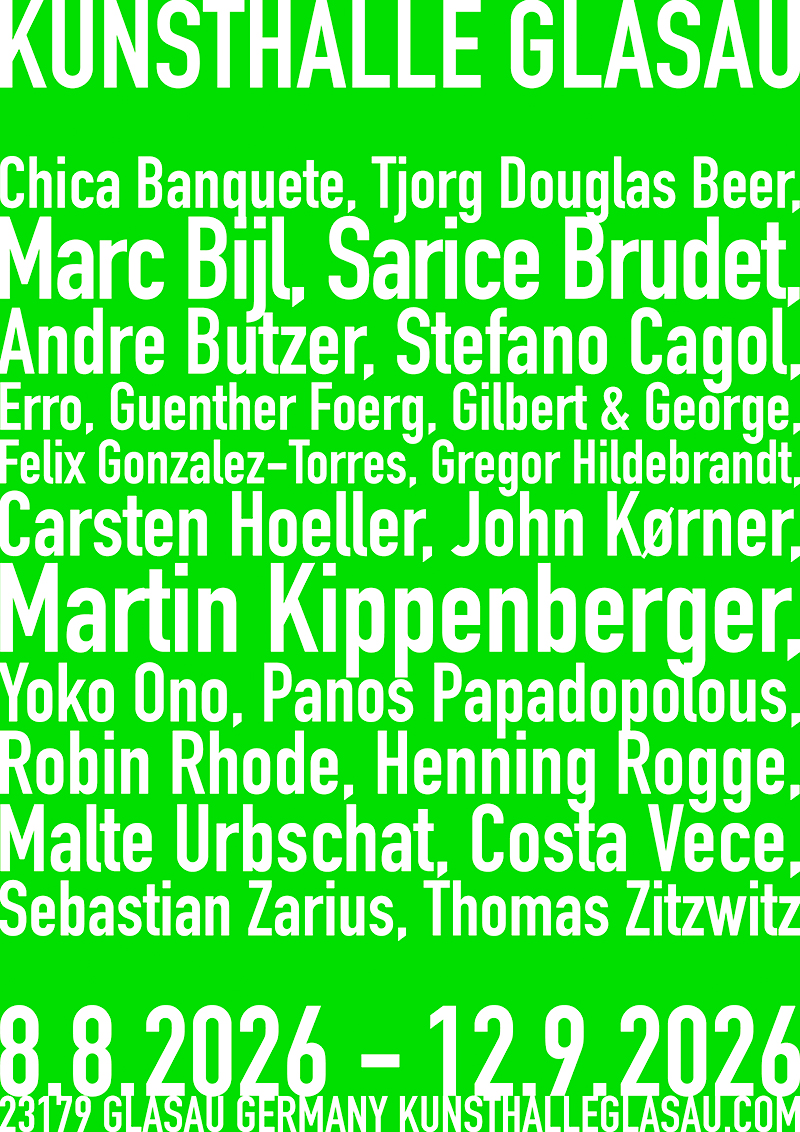
Tjorg Douglas Beer has collaborated with artist colleagues on multiple occasions in projects like i.e. The Forgotten Bar Project, The Berlin Kreuzberg Biennale or Galerie im Regierungsviertel Berlin. This exhibition shows a selection of works that have been part of previous projects or have been collected during the last years as well as works provided by the partaking artists.
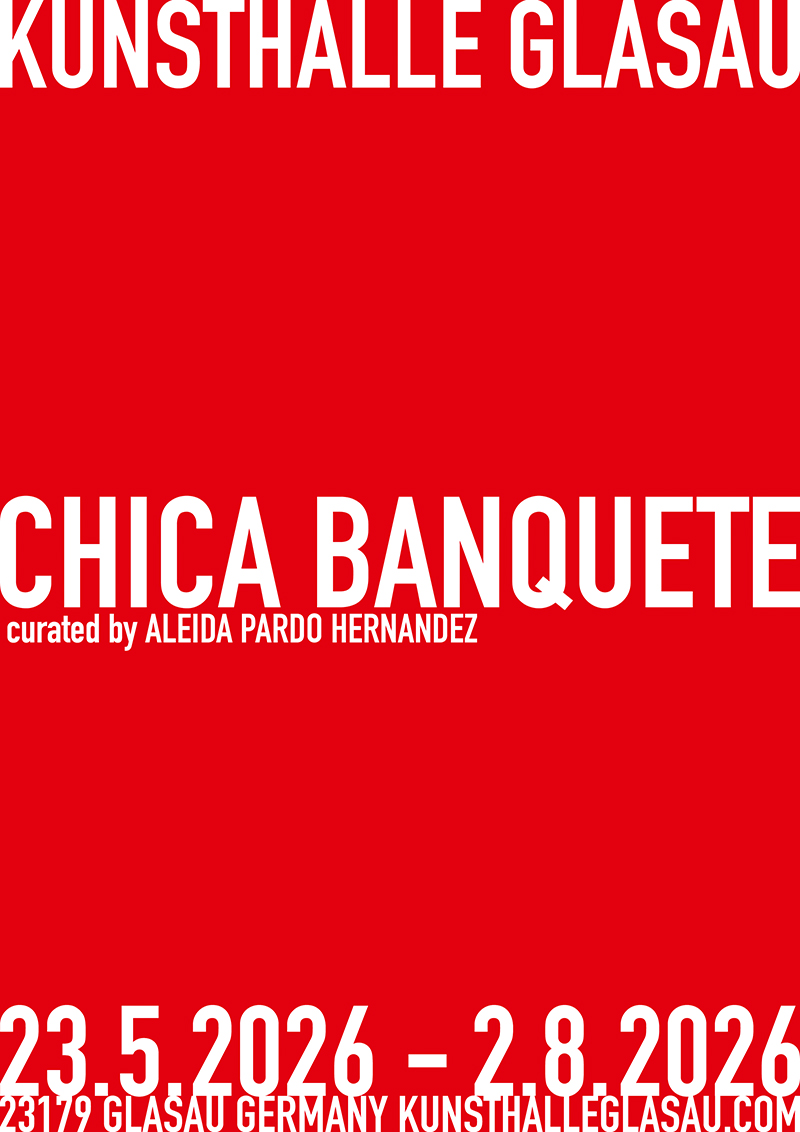
Chica Banquete (Corina Bistritsky)
Buenos Aires, Argentina, 1991
Chica Banquete’s artistic practice explores the relationship between the female body and the social pressures women face. Her work involves storytelling centered on her alter ego, who grapples with themes such as the fear of failure, productivity, and the concept of success within the capitalist system. While her work explores various media—with painting and sculpture being the predominant ones—all are linked to a narrative and editorial practice rooted in comics, whose main focus is banquets, food, and parts of the female body. Through surrealist scenarios, she employs a childlike style to blend protest, humor, and narrative elements into irreverent pieces that redefine discomfort and celebrate the body as it is.
Corina Bistritsky studied Theater Directing at the Center for Cinematic Research and at the School of Performing Arts and Psychology at the University of Belgrano. She is a writer and visual artist. In 2017, she published her first book, *Una casa que no fue*, with the Argentine publisher Pánico el Pánico. That same year, she was selected for the Buenos Aires Young Art Biennial with her novel *El gran danés*. In 2022, she had her first solo exhibition at Banda Municipal.
Current work includes co-writing a film with Miel Bargman and Vladimir Durán and a play with Ariel Bar-On. Her novel *El gran danés* was published in 2025 by Almadía.
Her work is part of the M. Foundation’s collection.
Chica Banquete lives and works in Mexico City.
The exhibition is curated by Aleida Pardo Hernandez.
Buenos Aires, Argentina, 1991
Chica Banquete’s artistic practice explores the relationship between the female body and the social pressures women face. Her work involves storytelling centered on her alter ego, who grapples with themes such as the fear of failure, productivity, and the concept of success within the capitalist system. While her work explores various media—with painting and sculpture being the predominant ones—all are linked to a narrative and editorial practice rooted in comics, whose main focus is banquets, food, and parts of the female body. Through surrealist scenarios, she employs a childlike style to blend protest, humor, and narrative elements into irreverent pieces that redefine discomfort and celebrate the body as it is.
Corina Bistritsky studied Theater Directing at the Center for Cinematic Research and at the School of Performing Arts and Psychology at the University of Belgrano. She is a writer and visual artist. In 2017, she published her first book, *Una casa que no fue*, with the Argentine publisher Pánico el Pánico. That same year, she was selected for the Buenos Aires Young Art Biennial with her novel *El gran danés*. In 2022, she had her first solo exhibition at Banda Municipal.
Current work includes co-writing a film with Miel Bargman and Vladimir Durán and a play with Ariel Bar-On. Her novel *El gran danés* was published in 2025 by Almadía.
Her work is part of the M. Foundation’s collection.
Chica Banquete lives and works in Mexico City.
The exhibition is curated by Aleida Pardo Hernandez.
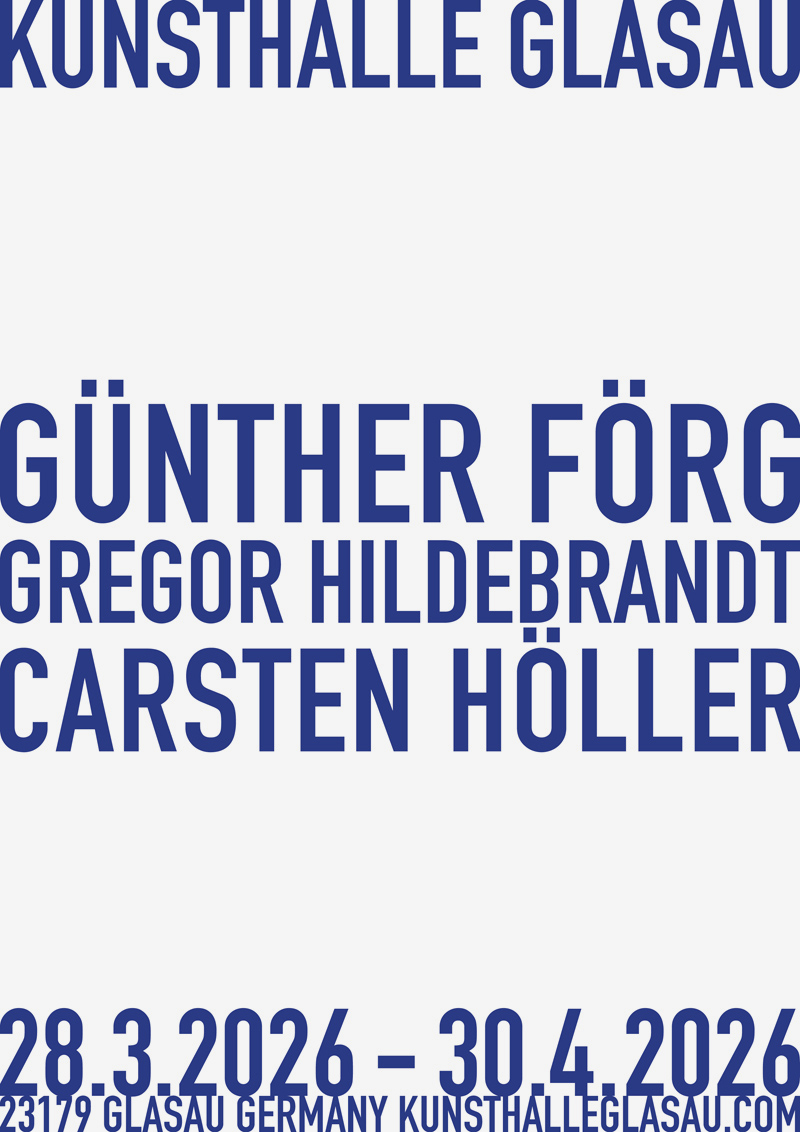
Tjorg Douglas Beer has collaborated with artist colleagues on multiple occasions in projects like i.e. The Forgotten Bar Project, The Berlin Kreuzberg Biennale or Galerie im Regierungsviertel Berlin. This exhibition shows a selection of works that have been part of previous projects or have been collected during the last years.
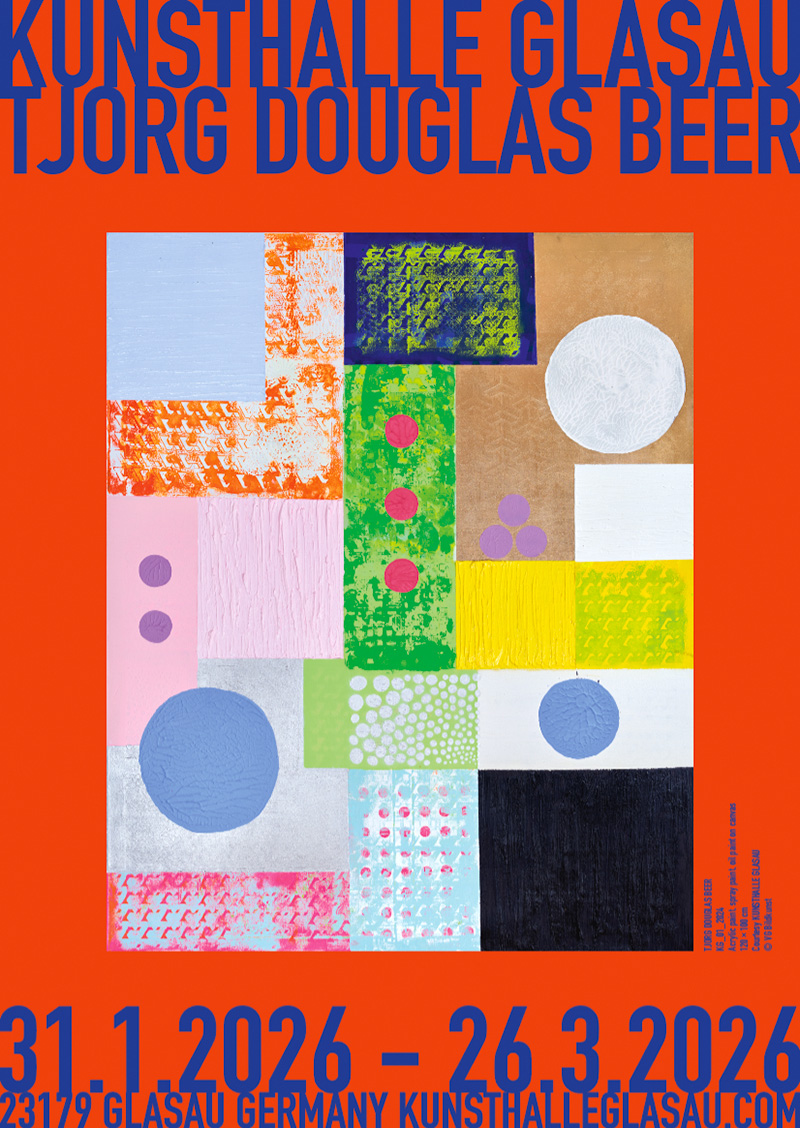
Beer's artistic practice is a means of making sense of the world, putting it in order, and communicating it. His work is influenced by everyday life, politics, literature, and music. At the beginning of his pictorial production, he created banner-like collages on plastic tarps, works closer to the desire to tell a story. Now, in his most recent work, the artist makes a conceptual decision: to completely distance himself from narrative elements and connect with painting in a freer way.
To achieve this, Beer uses stencils and disposable materials such as coffee capsules, headphone wrappers, and records, with which he begins to paint under an automatic action. The use of stencils allows him to replicate patterns and structures, as well as generate superimpositions on the canvas. The constant execution of pattern use, when combined with different materials such as aerosol, acrylics, and oils, creates a kind of visual dissonance similar to 1980s computer game graphics and the sampling process in music. Each painting is a composition of visual noises.
In addition to paintings, one bronze sculptures is part of the exhibition. Beer uses plastic objects that he assembles to form sculptural figures that he casts in bronze. Resources such as water bottles, promotional lighters from convenience stores, toys like Barbie or Transformers, antidepressant pill containers, and vitamin jars are all objects that, for the artist, configure dystopian materials of contemporaneity. Beer assembles these dystopian materials to create a utopian statue in a sacred position.
To achieve this, Beer uses stencils and disposable materials such as coffee capsules, headphone wrappers, and records, with which he begins to paint under an automatic action. The use of stencils allows him to replicate patterns and structures, as well as generate superimpositions on the canvas. The constant execution of pattern use, when combined with different materials such as aerosol, acrylics, and oils, creates a kind of visual dissonance similar to 1980s computer game graphics and the sampling process in music. Each painting is a composition of visual noises.
In addition to paintings, one bronze sculptures is part of the exhibition. Beer uses plastic objects that he assembles to form sculptural figures that he casts in bronze. Resources such as water bottles, promotional lighters from convenience stores, toys like Barbie or Transformers, antidepressant pill containers, and vitamin jars are all objects that, for the artist, configure dystopian materials of contemporaneity. Beer assembles these dystopian materials to create a utopian statue in a sacred position.